
Root Canal Treatment - Dr. Dadoo's Family Dental Clinic
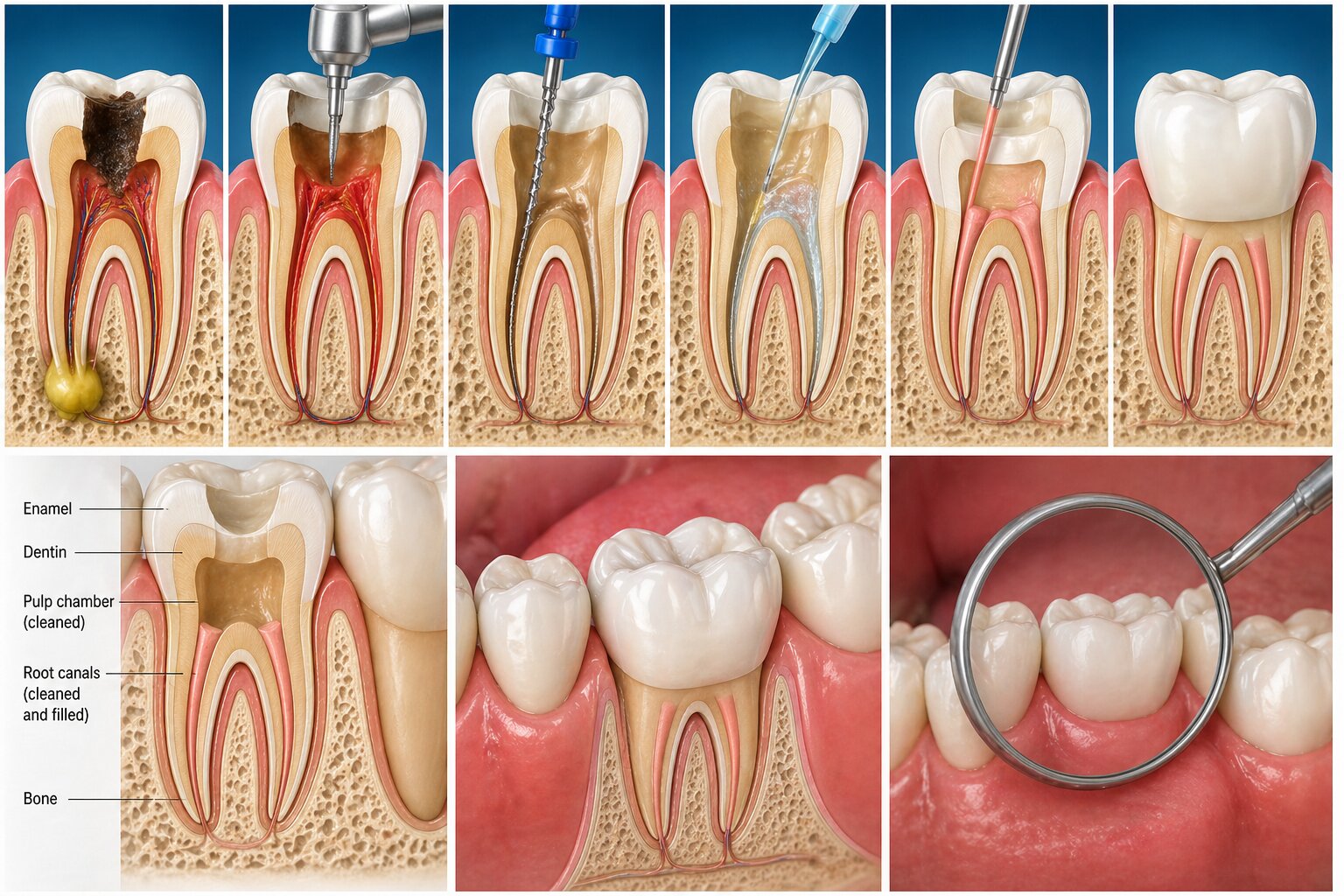
A root canal treatment is a dental procedure designed to remove infected or damaged pulp from the inner layers of a tooth. This becomes necessary when bacteria enter through deep cavities, cracks, or chips, causing the enamel to weaken and infection to spread. At our dental clinic in Delhi, the root canal procedure is typically completed over two visits. During the first appointment, the area around the affected tooth is numbed to ensure comfort. The infected pulp is carefully removed, and the inner chambers of the tooth are cleaned and filled with a protective material called gutta-percha to prevent further infection. In the second visit, the treatment is completed by placing a dental crown over the restored tooth. This helps strengthen the tooth, restore its function, and protect it from future damage.
What is Root Canal Treatment (RCT)?
A root canal is a dental procedure used to eliminate bacteria from an infected tooth, prevent reinfection, and preserve the natural tooth structure. During the treatment, the inflamed or infected pulp is carefully removed. The inner part of the tooth is then thoroughly cleaned, disinfected, and shaped. Finally, the space is filled and sealed to protect the tooth and restore its function.
Why have root canal treatment?
Root canal treatment, also known as endodontic therapy, is a procedure designed to save a severely damaged or infected tooth caused by decay, disease, or injury. It helps preserve the natural tooth, preventing the need for extraction and maintaining long-term oral health. In fact, this treatment saves millions of teeth each year.
Keeping your natural teeth is always preferable to replacing them with artificial options. Each tooth plays an important role in proper biting and chewing. When a tooth is lost, the surrounding teeth can shift or tilt into the empty space, leading to difficulties in chewing and increasing the risk of further decay and gum disease.
Maintaining strong, healthy teeth ensures better function, stability, and overall oral health, making root canal treatment a reliable and effective solution for preserving your smile.
When is a Root Canal Needed?
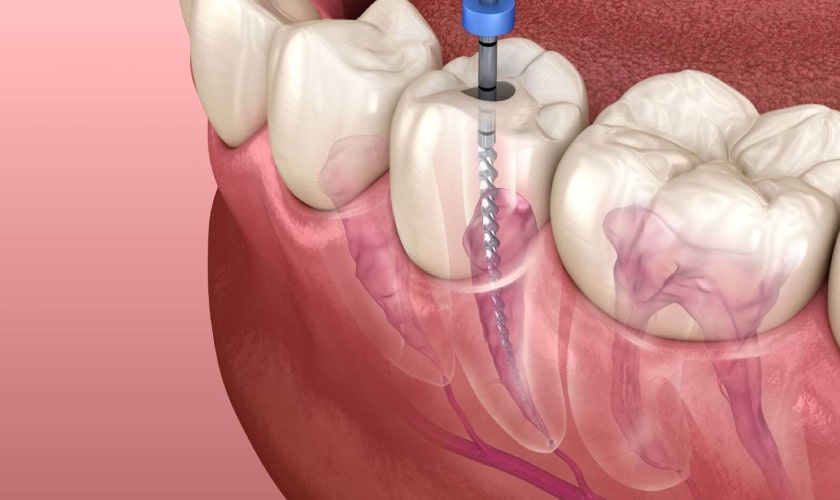
If you have a persistent pain that doesn’t disappear even when you’re at rest, it could be a sign of infection. It’s recommended to make an appointment for a root canal exam. Look out for symptoms such as:
- Facial swelling on the area of the infected tooth
- Dental abscesses
- Difficulty in opening the mouth, eating
- Discharge on the gum area
- Throbbing or pulsating toothache
- Great sensitivity to hot and cold
- Extreme pain when brushing
- Extreme pain on a previous root canal treatment
Keeping your natural teeth is always preferable to replacing them with artificial options. Each tooth plays an important role in proper biting and chewing. When a tooth is lost, the surrounding teeth can shift or tilt into the empty space, leading to difficulties in chewing and increasing the risk of further decay and gum disease.
Maintaining strong, healthy teeth ensures better function, stability, and overall oral health, making root canal treatment a reliable and effective solution for preserving your smile.
When is a Root Canal Needed?
Root canal treatment is a dental procedure that involves removing the infected or damaged pulp from the center of the tooth. Once the pulp is removed, the inner portion of the tooth is carefully cleaned, disinfected, filled, and sealed to prevent further infection. Since treated teeth can become more fragile over time, a dental crown or bridge is usually placed afterward to restore strength and protect against fractures.
We have experienced endodontists provide advanced root canal treatments, often completing the procedure in a single visit. With the use of modern technology such as rotary systems and endodontic microscopes, the treatment is precise, efficient, and highly effective. Placing a crown over the treated tooth further enhances its durability and can help it last for many years.
The cost of root canal treatment varies depending on several factors, including the location of the tooth, the severity of infection, and the complexity of the case. Front teeth like incisors and canines typically have a single canal, making them simpler and more affordable to treat. In contrast, molars and some premolars have multiple or curved canals, which require more time and expertise, resulting in higher costs.
With advanced pain management techniques and modern equipment, root canal treatment today is comfortable and minimally invasive. Patients can schedule a consultation to receive a detailed evaluation and an accurate cost estimate tailored to their specific dental needs.